



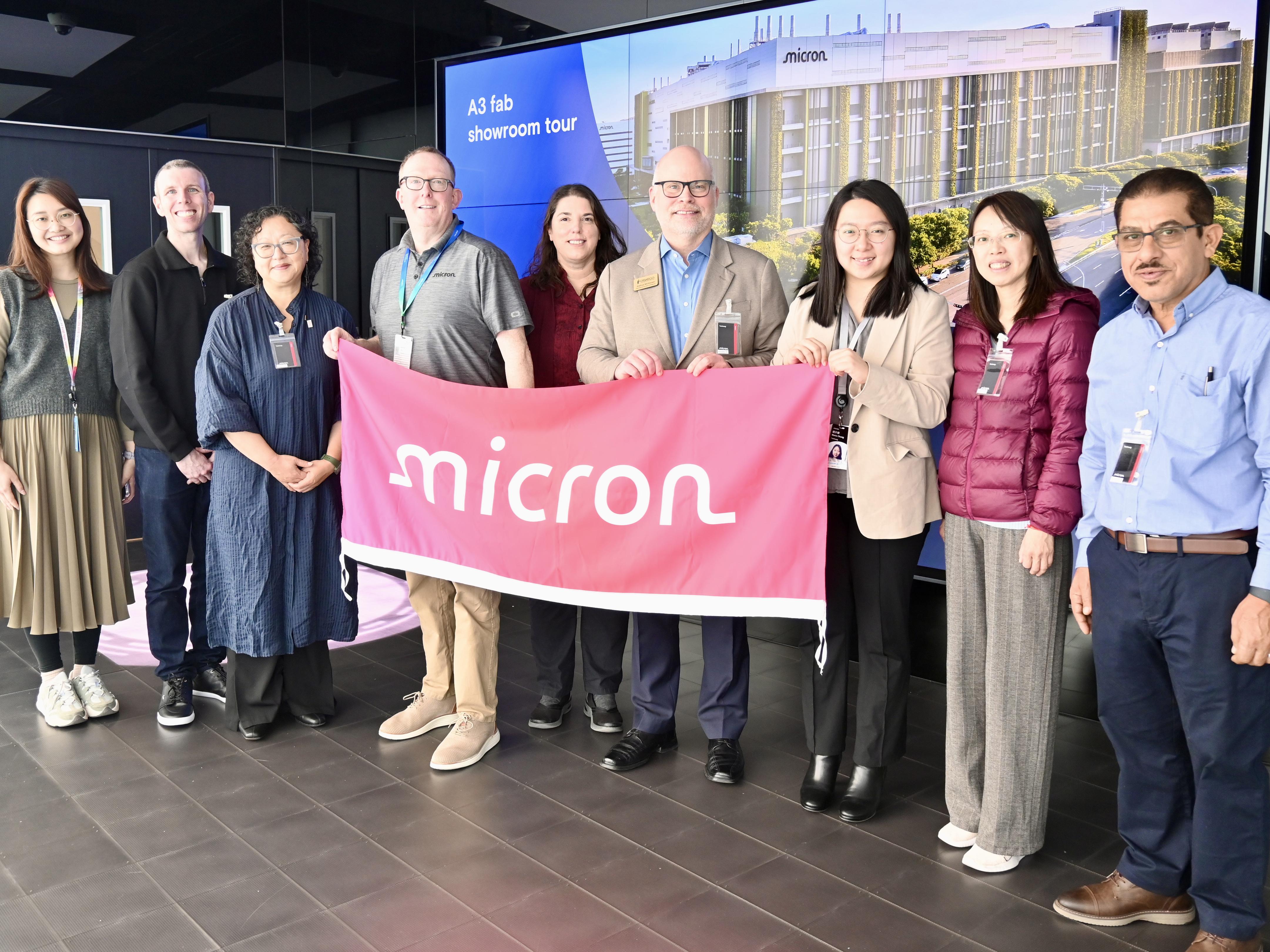
Representatives and SUNY Oswego and Monroe Community College enjoyed access and insights at Micron Technology’s A3 Fab in Taichung, Taiwan, providing a preview to the microchip fabrication plant coming to Clay in Central New York. They also met with top Micron leaders to discuss partnerships and opportunities for current and future students.
During a recent extended visit to Taiwan, SUNY Oswego faculty and staff continued paving the way for partnerships with other universities and global corporations, including Micron Technology.
It culminated three visits to Taiwan as well as South Korea for Oswego and partner institution Monroe Community College (MCC) in Rochester, from a highly competitive Increase and Diversify Education Abroad for U.S. Students (IDEAS) grant from the U.S. Department of State, supporting efforts to establish, expand and/or broaden American student mobility overseas.
Joshua McKeown, associate provost for international education, noted that the project’s title, “Getting Ready for Micron: How a Rural-Serving Public Regional University and an Urban Community College in Upstate New York Will Prepare Students for Opportunities in the Global Semiconductor Industry,” encompasses its importance to the region and the world.
“We have created and deepened partnerships over there with industry, universities and governments ready to work with us,” McKeown noted.
With Micron Technology breaking ground on a microchip fabrication plant in nearby Clay, just over the Oswego County line, and investing $100 billion in the Central New York region in the next 20 years. With the area’s largest economic development project ever comes opportunities in every sector, with education playing a vital role.
SUNY Oswego, McKeown said, is well-positioned to prepare graduates for working at the large facility and partner industries while also supporting the educational pipeline, complementing the project’s growth and development.
“We produce a lot of STEM graduates vital to the semiconductor industry, including in computer science, engineering and chemistry, but also many students who will become teachers. We have the strongest career and technology education program in the state, literally preparing the teachers who will prepare the next generation to work as technicians and other manufacturing jobs,” he said. “And I suspect many SUNY Oswego graduates will also be competing for technical careers on the ground at Micron, and we welcome that.”
‘Incredible access’
SUNY Oswego representatives – also including electrical and computer engineering faculty members Mustafa Ayad and Hui Zhang and chemistry faculty Thomas Brown –- plus two MCC representatives met key leaders and others in Taiwan and appreciated the work of Mike Guttman, a Micron program manager, touring with them and providing “incredible insight to the industry and access to facilities,” McKeown said.
“We toured Micron's A3 Fab in Taichung, which will be very much like what is coming to Clay,” McKeown said. “It’s an incredibly clean and enormous robotic manufacturing site.”
While there, the delegation met with several Micron leaders from the talent recruitment and management operations.
“We discussed multiple potential projects, both direct with Micron and also through our university partner National Yang Ming Chiao Tung University (NYCU), including Taiwan-based internships, faculty-led initiatives and ways to serve Micron's talent needs globally,” McKeown said. “Both the U.S. Micron representative in Mr. Guttman and their Taiwan team indicate the value in not only technical workforce training but understanding our respective cultures, language training and more. They all understand that it really is a global semiconductor ecosystem.”
In Hsinchu, Taiwan, the group had meetings with and toured the Taiwan Semiconductor Research Institute, NYCU and the Nano Facility Center clean room.
“We felt particularly welcomed by the universities, and they appreciated what we’re doing,” McKeown said. “There is a lot of strength in having industries and universities here cooperate.”
An eventful final day in Taiwan concluded with a briefing and informational meeting at the American Institute of Taiwan and talks at the Taiwanese Ministry of Education.
“The electrical and computer engineering and chemistry faculty with me were great,” McKeown said. “They discussed specific ways, through microcredentials, for example, for our students to be more career-ready for this industry. They are already thinking of these follow-ups.”
The effort to scale up a workforce starts early in education, and Oswego is known for training teachers in technology education and other tracks, including career and technical education, that can help a variety of learners enter the field. This grant helped show that a successful model exists.
“Working with the K-12 sector, bootcamps and technology education to expose potential workforce from high school through college is what Taiwan does well,” McKeown said. “What we are working on, both at Oswego and throughout the school systems, is how to embed semiconductor education into the curriculum.”
Study abroad and exchange programs
With this grant and the visits, opportunities for collaboration are now expansive. All parties are interested in developing programs that could include students, current teachers and professionals from SUNY Oswego, Taiwan and South Korea in any of those locations.
“There are definitely ways we can make sure SUNY Oswego is positioned in this global talent pipeline,” McKeown said. “That’s something our office knows how to do. Oswego has some excellent and expert faculty and leadership in those programs.”
Through its modern and friendly atmosphere and rich pop culture exports, East Asia is an increasingly popular destination, and this initiative could make it even more attractive, he said.
“Once there, our students will love the people, the food, the culture,” McKeown said. “The people are very welcoming and friendly, with a terrific cultural heritage. When you look at that region of East Asia, it is stable, it is peaceful, it is prosperous and for Americans traveling there, it is 100 percent welcoming.”
In addition to the traditional benefits of study abroad, these programs can prepare students for a more seamless professional integration.
“All education abroad is great, but our graduates who go to work in this industry are going to interact with people from Taiwan,” McKeown said. “It might be their boss, a co-worker, a vendor, a supplier or somebody else, but we want our students to be culturally confident and competent."
In all, McKeown said the project was very successful in terms of connections made, opportunities opened and groundwork for future collaborations established.
“The whole point of the grant was to build capacity, and our faculty expertise and exposure have grown,” McKeown said. “I will keep spreading the word as best I can. We will look at continuing these opportunities, and would love to find funding to keep projects like this going.”
Among SUNY Oswego, eight faculty members have been part of these visits, and will have opportunities to return and develop exchange and study-abroad programs, as well as other beneficial partnerships.
“This is not a one-and-done, and possibilities are exciting,” McKeown said of the project.
“I really think that we successfully plugged into what I would call the university-industry-government ecosystem,” McKeown said. “Semiconductor companies, all the major players, ultimately compete for the same talent. And we absolutely can cultivate that talent at SUNY Oswego.”
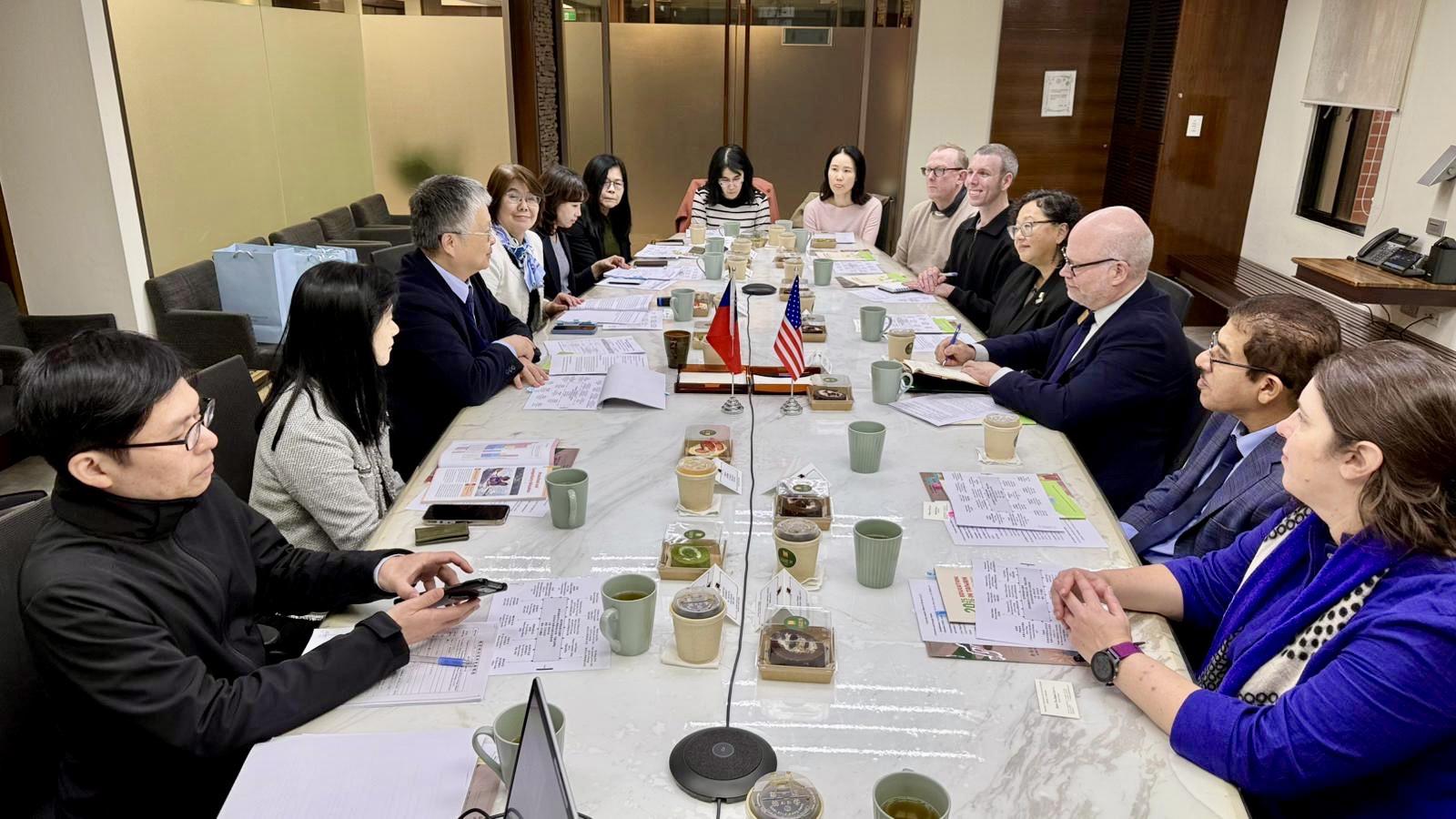
The delegation from SUNY Oswego and Monroe Community College met with the American Institute of Taiwan at the Taiwanese Ministry of Education, including the Deputy Minister and his team.
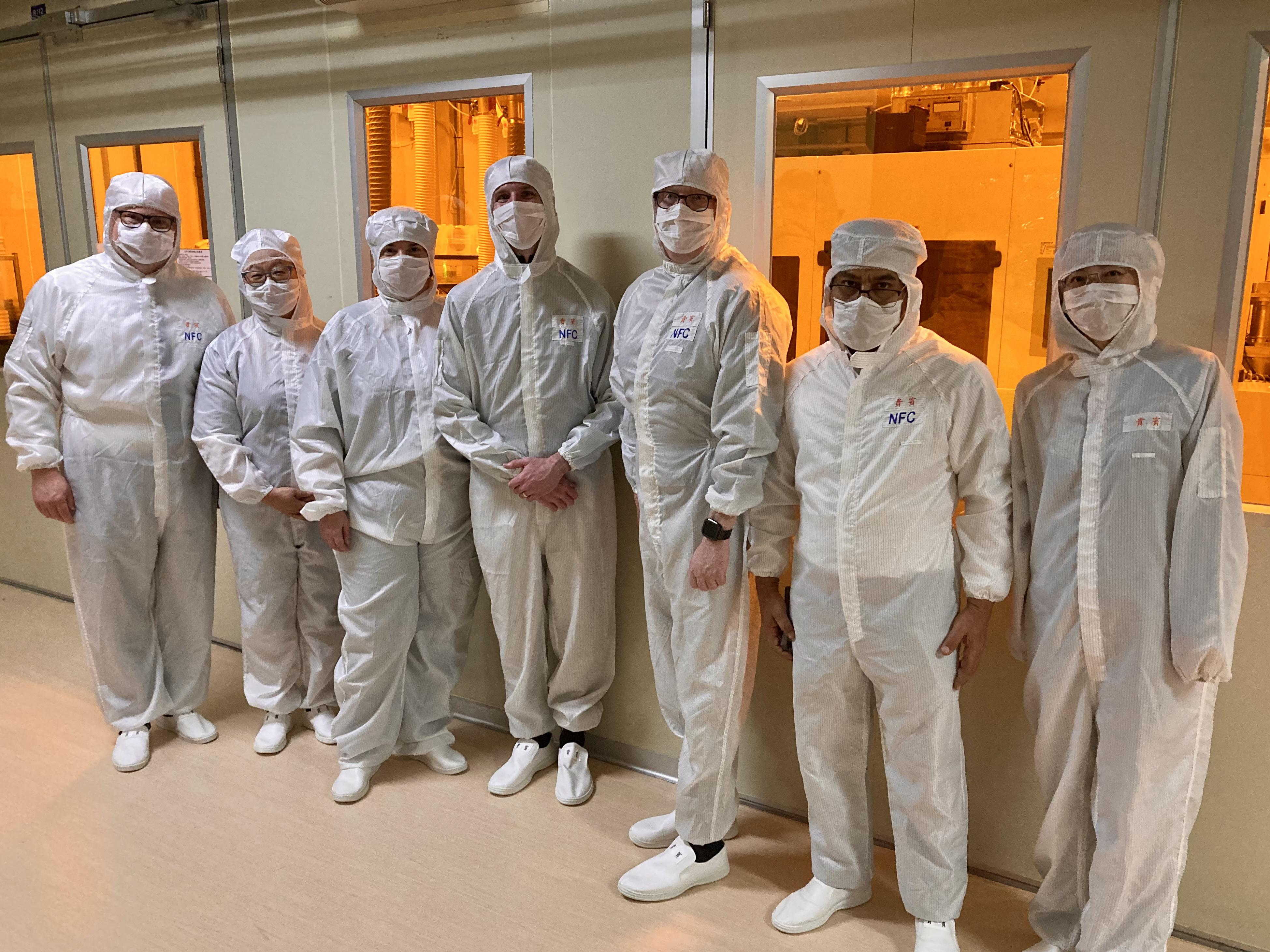
SUNY Oswego and Monroe Community College participants had the opportunity to tour National Yang Ming Chiao Tung University’s Nano Facility Center.