



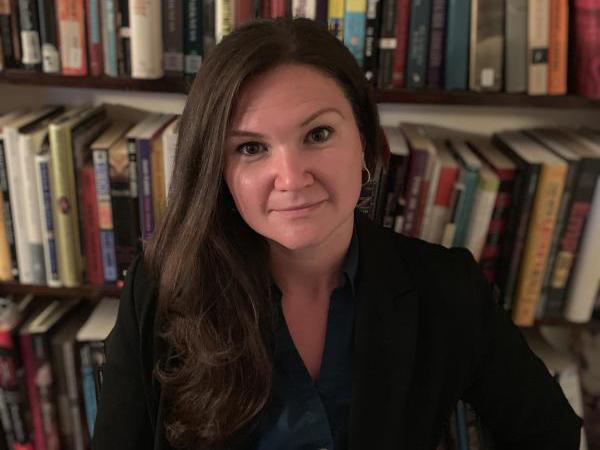
A new book edited by SUNY Oswego English and creative writing faculty member Roberta Hurtado makes the case for the importance of inclusion in higher education, as well as practical strategies to support these efforts.
”Not Token Gestures: Practical DEI Strategies in 21st-Century Higher Education,” released by Bloomsbury in December, explores the why and how of building campuses and courses that are open to the whole spectrum of students and employees.
Hurtado noted that criticisms of diversity, equity and inclusion (DEI) efforts do not take into account how many people are covered under this umbrella.
“Veterans are included in DEI,” Hurtado said. “People from rural communities as well, in addition to people of color, women, those with disabilities and different socioeconomic backgrounds.”
Hurtado, who also directs SUNY Oswego’s Latin and Latin American studies program, said that engaging with people of different backgrounds and perspectives is important in education and everyday life, and this book looks to facilitate that effort in the sphere of higher education.
“We wanted to make it user-friendly, not adversarial,” said Hurtado, both as a philosophy for the book and preparing people for the work in general.
“When you’re running on no time and no sleep, how do you get this work done?” Hurtado said. “In the book, we offer models, we offer timelines and we offer ways to support you and others doing the work.”
Hurtado realizes it is a complicated topic, and something that can be daunting, especially going into unfamiliar spaces and after learning to see things a particular way.
Collaborative effort
The book includes a number of Oswego connections as well as educators, authors, artists and others from around the world of higher education.
Ritu Radhakrishnan, chair of the Department of Curriculum and Instruction, provided a foreword for the edited collection and contributed to it. Other contributing faculty include Michael Chaness of Native American studies, and Laura Donnelly from English and creative writing, and Celinet Duran Jiménez from criminal justice.
Hurtado said the book's first seeds came from her capstone in participating in the 2023 class of SUNY’s Hispanic Leadership Institute, which was to create a project the participant thinks their campus needs. Some of her cohort members contributed chapters as well.
“Hearing about these other amazing capstone projects coming out of my cohort, plus connecting with people from all over the country, encouraged me to find a way,” Hurtado said.
After completing the HLI program, Hurtado decided her next step would involve earning an academic excellence grant from SUNY and working with the Triandiflou Institute –- where she served as a fellow –- to create a symposium for women of color in higher ed, hosted at SUNY Oswego’s Syracuse Campus.
The day offered three keynote speakers and three channels of programs that included information about navigating promotion, maintaining health and wellness and creating mentoring (also known as femtoring) opportunities.
“It was a great day and registration filled early,” Hurtado recalled. “As part of it, we created a special issue for the Gatherings journal Amy Shore and I are on the board for, and including work from Keturah Hancock, a creative writing graduate now pursuing a master’s at Oswego.”
The book aims to create practical strategies that support inclusive campus climates and draws from knowledge across communities to provide learning spaces that encourage student growth -- topics range from hiring and mentoring to curriculum development and fostering inclusive practices and more.
Hurtado is proud of the 20 contributors who brought different backgrounds, expertise and understandings to foster a holistic view.
“When you’re dealing with education, we need to think outside the box,” Hurtado said. “You need to engage people from different cultural communities, with different ways of sharing information. Sometimes the right photography can tell the story as well as a scholarly article.”
Ultimately, in times that are divisive for some, Hurtado and the contributors look to bring people together while shining a light on the importance of inclusion.
“We hear about DEI like it’s this villain lurking in the background with a cape,” Hurtado said. “But it’s really about drawing from our various wealths of knowledge and sharing it, providing the most depths and breadths of background for everybody.”